
Power Over Ethernet Support in Industrial Networks
- snipelus
- Oct 6, 2025
- 4 min read
In the fast-paced world of industrial networking, efficiency and reliability are king. One technology that has steadily gained traction is Power over Ethernet (PoE). It’s a game-changer for businesses that need to power devices and transmit data over a single cable. Today, I want to walk you through the ins and outs of PoE, focusing on its capabilities in industrial networks. Whether you’re managing a power plant, an oil & gas facility, or any critical infrastructure, understanding PoE can help you build a more robust communication system.
Understanding poe network capabilities in industrial settings
PoE technology allows network cables to carry electrical power alongside data. This means devices like IP cameras, wireless access points, and industrial sensors can receive power and data through the same Ethernet cable. The benefits? Fewer cables, simpler installations, and reduced costs.
In industrial environments, poe network capabilities shine because they simplify complex wiring setups. Imagine a sprawling oil refinery or a power plant where running separate power lines to every device is costly and cumbersome. PoE cuts through that complexity by delivering both power and data in one go.
Here are some key advantages of PoE in industrial networks:
Reduced installation costs: No need for electricians to install power outlets everywhere.
Flexibility: Devices can be placed where they’re most effective, not just near power sources.
Centralized power management: Power can be controlled remotely, allowing for easier maintenance and troubleshooting.
Safety: PoE uses low voltage, reducing electrical hazards in harsh environments.
Industrial-grade PoE switches and injectors are designed to withstand extreme temperatures, vibrations, and dust, making them perfect for critical infrastructure.

Industrial Ethernet switch designed for harsh environments
How poe network capabilities enhance industrial communication
In industrial networks, communication reliability is non-negotiable. PoE supports this by enabling seamless integration of devices that monitor and control operations. For example, IP cameras powered by PoE can provide real-time surveillance without worrying about power outlets. Similarly, wireless access points can be strategically placed to ensure uninterrupted connectivity across large facilities.
PoE also supports Power over Ethernet support devices that comply with standards like IEEE 802.3af, 802.3at, and 802.3bt, which define power levels and compatibility. This standardization ensures that devices from different manufacturers can work together smoothly.
Another benefit is the ability to use uninterruptible power supplies (UPS) with PoE switches. This means critical devices stay powered even during outages, maintaining network integrity and safety.
Here’s a practical example: In a power plant, sensors monitoring temperature and pressure can be powered and connected via PoE. If a sensor fails, the centralized system can quickly identify and isolate the issue, minimizing downtime.
Industrial control panel utilizing PoE for device connectivity
What are the drawbacks of using PoE?
While PoE offers many benefits, it’s important to understand its limitations, especially in demanding industrial environments.
Power limitations: Standard PoE can deliver up to 15.4 watts per port, while PoE+ can provide up to 30 watts. For devices requiring more power, such as some PTZ cameras or industrial machinery, PoE might not suffice without specialized equipment.
Distance constraints: Ethernet cables have a maximum effective length of 100 meters for PoE. Beyond this, power and data quality degrade, which can be a challenge in large industrial sites.
Heat generation: PoE switches can generate heat, especially when powering multiple devices. This requires proper ventilation and sometimes additional cooling solutions.
Initial investment: Industrial-grade PoE equipment can be more expensive upfront compared to traditional setups, though the long-term savings often justify the cost.
Despite these drawbacks, many businesses find that the benefits outweigh the challenges, especially when using high-quality, industrial-rated PoE components.

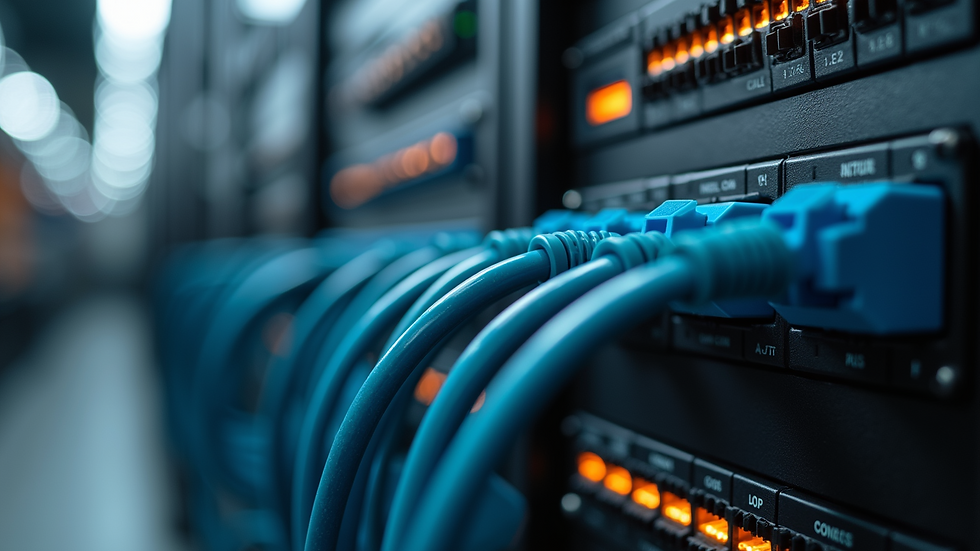
Industrial Ethernet cables connected to a PoE switch in a control room
Best practices for implementing PoE in industrial networks
To get the most out of PoE in your industrial network, consider these actionable recommendations:
Choose industrial-grade equipment: Look for switches and injectors rated for temperature, humidity, and vibration conditions typical of your environment.
Plan your network layout carefully: Keep cable runs under 100 meters or use PoE extenders to maintain power and data quality.
Use proper cable types: Cat5e or higher is recommended for PoE to ensure reliable power delivery.
Implement centralized power management: Use PoE switches with management features to monitor power consumption and device status.
Test and document your setup: Regularly test PoE devices and maintain documentation for troubleshooting and future upgrades.
Consider redundancy: For critical devices, use UPS-backed PoE switches to avoid downtime during power failures.
By following these steps, you can build a resilient and efficient industrial network that leverages the full potential of PoE.
Looking ahead: The future of PoE in industrial networks
The future looks bright for PoE technology in industrial applications. Advances in standards like IEEE 802.3bt are increasing power delivery capabilities, enabling more powerful devices to run on PoE. This opens doors for innovations such as advanced robotics, AI-powered sensors, and smart grid components.
Moreover, the integration of PoE with IoT (Internet of Things) devices is transforming industrial operations. PoE simplifies the deployment of smart sensors and actuators, making it easier to collect data and automate processes.
As businesses continue to demand more reliable and scalable network solutions, PoE will play a central role in meeting those needs. Investing in PoE infrastructure today means preparing your network for tomorrow’s challenges.
If you want to explore reliable options for your industrial network, consider checking out power over ethernet support solutions tailored for harsh environments.
PoE is more than just a convenience - it’s a strategic advantage for industrial networks. By understanding its capabilities, limitations, and best practices, you can design a communication infrastructure that’s both powerful and flexible. Whether you’re upgrading an existing system or building from scratch, PoE offers a smart path forward.


Comments